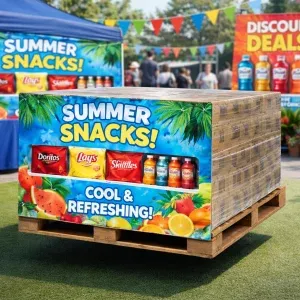
Large promotional displays are widely used at outdoor events to draw attention, direct visitors and support branding. While their size creates a strong visual impact, exposure to wind, moisture, sunlight and uneven ground raises important durability considerations. Displays that perform well indoors can behave very differently outdoors. Durability depends not only on size, but on material choice, build quality and placement. Careful planning helps ensure outdoor displays remain stable, safe and visually effective throughout the event.
Durability outdoors is a combination of structural strength, resistance to environmental conditions and the ability to remain visually consistent over time. Displays must stay upright, maintain their shape and retain print quality despite exposure.
Outdoor durability depends on:
If any of these elements are overlooked, even well-produced displays can fail prematurely.
Most large promotional displays are produced from lightweight boards designed for ease of transport and setup. These materials work well for short-term use but have limitations outdoors. Cardboard-based displays, for example, are vulnerable to moisture and prolonged exposure.
Protective coatings can improve surface resistance, but they do not make materials fully weatherproof. Prolonged damp conditions weaken fibres, while direct sunlight can fade colours. When using a cardboard tree cutout outdoors, exposure time and shelter become critical considerations.
Heavier materials offer greater resistance but increase transport and handling complexity. The right balance depends on event duration and conditions.
Wind is the most significant challenge for outdoor displays. Large surface areas act like sails, catching gusts and placing stress on bases and joints. Taller displays experience greater leverage, increasing the risk of tipping.
Displays positioned in open areas face a higher risk than those placed near walls, fences or structures. Orientation also matters. Reducing the surface area facing the prevailing wind improves stability.
Additional measures, such as weighted bases or discrete anchoring, significantly improve performance without altering appearance.
Outdoor ground surfaces are rarely uniform. Grass, gravel and uneven paving reduce base contact and stability. Sloped surfaces further increase tipping risk.
Flat, solid ground provides the best support. Where this is not available, stabilisation methods such as ground weights or levelling supports are essential. Without these adjustments, even small movements can compromise safety.
Duration plays a major role in durability. Displays used for a few hours during calm weather face fewer risks than those left outdoors for several days.
Short-term outdoor use allows for monitoring and quick removal if conditions change. Long-term exposure increases the likelihood of weather-related damage and structural fatigue. A cardboard tree cutout used briefly at a daytime event may perform well, while the same display left overnight outdoors may not.
Safety is a key factor when placing large displays outdoors. A falling display can cause injury or damage property, creating liability concerns.
This is particularly important at public events where foot traffic is unpredictable. Organisers must assess whether displays are appropriate for the environment and take steps to reduce risk.
Clear safety planning protects both attendees and organisers.
Outdoor lighting changes constantly. Direct sunlight, cloud cover and shadows all affect how displays appear. Colours that look balanced indoors may appear washed out or overly bright outside.
Preparing artwork with controlled contrast and balanced tones helps maintain visual clarity. Matte finishes reduce glare and improve readability in bright conditions.
Displays that maintain visual quality under changing light appear more professional and intentional.
Large promotional displays are also used to communicate information outdoors. For example, organisations promoting digital tools, such as an app for driving test, often rely on outdoor displays at events or community spaces to capture attention and provide guidance. These displays must remain clear and readable despite environmental distractions.
In such cases, durability supports both safety and communication effectiveness. If a display deteriorates quickly, the message is lost.
| Factor | Indoor Use | Outdoor Use |
| Wind exposure | Minimal | Variable |
| Moisture risk | Low | Moderate to high |
| Surface stability | Even | Often uneven |
| Monitoring required | Low | High |
This comparison highlights why outdoor placement requires additional consideration.
Small design changes can significantly improve outdoor durability:
These adjustments reduce stress on the display while maintaining visual impact.
Testing displays outdoors before public use helps identify weaknesses. Setting up in similar conditions allows organisers to assess movement, balance and visual clarity.
Testing should include:
Early testing prevents issues during live events.
Some environments are unsuitable for lightweight promotional displays. Exposed sites, high winds and long event durations often require heavier or fixed solutions.
A cardboard tree cutout offers portability and visual appeal, but its limitations must be respected. Choosing alternative display methods in challenging environments ensures safety and reliability.
Promotional displays used outdoors can perform effectively when conditions are properly assessed and managed. Factors such as material strength, exposure to weather, positioning and the length of time a display remains outside all affect durability. With careful preparation, appropriate weighting and sheltered placement, outdoor use is achievable. Recognising the limitations of each display type is essential to maintaining stability, visual quality and safety, ensuring the display continues to support the event without creating risk or visual degradation.
© 2026 Point of Sale Printers. All Rights Reserved.